|
Update by Dr Estelle Lazer We conducted field seasons in Pompeii in October 2018 and January 2019. This work was funded by an Industry and Community Seed Funding grant from the University of Sydney. Our first field season was extremely brief and essentially experimental. We wanted to establish better techniques for X-raying casts on site and to determine whether we could obtain readable X-ray images through lime cement. Ideally, we would have preferred to CT scan all of the casts as this would provide us with maximum information but this is not always possible as many of the victims ended their mortal lives in positions that make it impossible for them to enter the gantry of a CT scanner. In addition, a number of victims were cast on the ground or are still attached to considerable quantities of pyroclastic material that makes it impossible for them to be moved, while others are simply too fragile to be transported to a CT scanner. Taking X-ray images through thick plaster, which is essentially the same density as bone is extremely challenging and it is a credit to our digital X-ray engineer that in spite of the difficulties, we have been able to get some fantastic results. Our October team consisted of Associate Professor Kathryn Welch and myself, as directors of the project, Stijn Luyck, our amazing digital X-ray engineer, with whom we have worked since the beginning of the project, and an equine vet, Dr Julia Ridder, who has worked for many years with Stijn in X-raying horses. They are extremely efficient and make a formidable team. The portable digital X-ray machine that we use was specifically developed for veterinary purposes as there are many animals, like elephants, giraffes and horses, that do not easily enter veterinary clinics. They provided the most recent iteration of the SOUND SPRINT AIR that uses a Canon 810C panel and dedicated algorithms and anti-scatter software to remove the effects of secondary radiation. The X-ray source was a battery powered generator. This has less power than a generator with cables but had the distinct advantage of not needing hard wires that made it more suitable for use around fragile casts. Our experimental work in October 2018 indicated that it was capable of providing good results. In October, we examined a number of the nine casts in lime cement located in Region 1 that are still in situ above the lapilli. This material is not exactly radio-opaque, but there are fewer chances of obtaining readable X-ray images than with plaster. We also examined the four victims cast outside the so-called Porta Nocera that are displayed under cover near the location of their discovery. These plaster casts also present a challenge as they lie close to the ground and it is extremely difficult to angle the equipment to achieve readable X-ray images that are not distorted. Our January field season extended the work we undertook in October. This season particularly benefitted from the establishment of improved techniques for obtaining X-rays through the thick plaster. Our team was considerably larger, including Associate Professor Kathryn Welch, myself, Stijn Luyck, Julia Ridder (assistant radiographer), Jeremy Van Brakel, Dr Alain Middleton (forensic dentist), Associate Professor Dzung Vu (radiologist and anatomist), and Oshry Chageg and James Buckman (photographers). As with our October field season, our work on site was overseen by Pompeii Archaeological Park representative and physical anthropologist, Valeria Amoretti. Inclement January weather hampered our efforts. We could not subject the delicate X-ray machinery to heavy rain. So we concentrated on casts that are stored in covered areas, including those stored in glass cases dating back to the 19th century. Opening these cases was particularly difficult for the workmen on the site but they proved up to the task. We were able to X-ray 18 casts during the course of a week. This led to many interesting new discoveries. For example, we were able to establish sex and age for some of the casts made in the 19th and 20th centuries and also found non-skeletal inclusions embedded within the plaster, like buckles. Even in such a short space of time, there have been so many improvements in technology and techniques that revisiting cases that we studied in the first year of the Pompeii Cast Project proved worthwhile. For example, the 16th victim that was cast in 1890, was first X-rayed in 2015. At that time, we found little skeletal evidence, apart from the lower limbs, the feet and hand bones. In January we discovered evidence of some cranial material, as well as teeth and bone from the upper and lower jaw in the region of the shoulder. We completed another very successful season of fieldwork in April, which will be the subject of a documentary that will go to air later in the year. We will keep everyone informed as more details become available. Watch this space and don't forget to follow us on facebook @pompeiicastproject Thank youWe would, as always like to thank our fabulous team, who worked through in very difficult and uncomfortable conditions in January. We would very much like to thank our partners in this project, the Pompeii Archaeological Park. We are particularly grateful to the Director General of the Pompeii Archaeological Park, Professor Massimo Osanna for his continued support of the Pompeii Cast Project. Special thanks go to our excellent colleagues, Dr Grete Stefani, Dr Alberta Martellone, Dr Bruno di Nigris and Dr Valeria Amoretti, without whom we would not have been able to achieve our goals in October and January. We would also like to thank the University of Sydney for the grant that made this work possible and the support of our school partners at Chester Hill High School and Chifley College as well as Academy Travel. The season in PicturesPhotographs by the wonderful Oshry Chageg - © The Pompeii Cast Project
0 Comments
The wonderful documentary Pompeiis Final Hours with host Bettany Hughes, filmed last year, is being replayed on SBS. It features the CT scanning and research undertaken by Estelle and the team at the local hospital in Pompeii in 2017. Watch online here: www.sbs.com.au/ondemand/program/pompeiis-final-hours-new-evidence
Update from: Dianne Harper, Chifley College Senior Campus Chifley College Senior Campus is excited to announce that we have partnered with Chester Hill High School and Sydney University, including Dr Estelle Lazer and Associate Professor Kathryn Welch, to better understand the human victims of the eruption of Mt Vesuvius in AD79. The Pompeii Cast Project sets out to challenge the myths about the lives and personalities of these victims of a mass disaster, and use the latest developments in digital imaging and scientific analysis to discover what can actually be known about these victims.
Terri Katsikaros and Dianne Harper are passionate and experienced teachers of Ancient History, with a particular interest in widening participation opportunities for students from low socio economic backgrounds. Watch a short video ‘Radiology Beyond Medicine’, produced by Roberto Canigliua of Philpis Italy, demonstrating their involvement in our work. We thank Roberto for making it available and for his enthusiastic support of our project. The video shows the work of the Pompeii Archaeological Park (especially the expert restorers who had to move the casts and the Director General, Professor Massimo Osanna) and medical staff of Maria Rosaria Casa di Cura (Hospital) Pompeii who assisted in the making of the 2015 documentary for Lion Television and the 2017 documentary for Voltage Television. There is a short glimpse of Estelle as she watches the casts being scanned in the local hospital.
Some help with the Italian:
Our resources page is full of links to news articles, documentaries, lectures and more. Revisit this stellar lecture by Dr Estelle Lazer on last year's field work, brought to you by Sydney Ideas podcast archive on Soundcloud
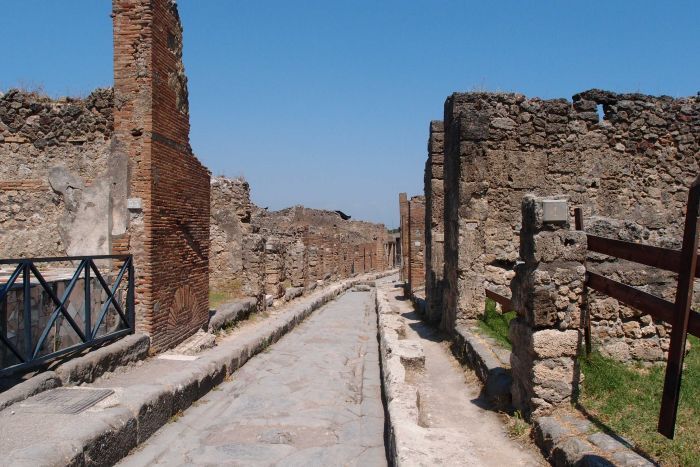
Our resources page is full of the latest media coverage of the work our tean gets up to in the field and how it connects to our colleagues working across the archaeological park. Documentaries, Publications and Radio Interviews are just some of the ways in which we are able to get the latest insights and research out to you.
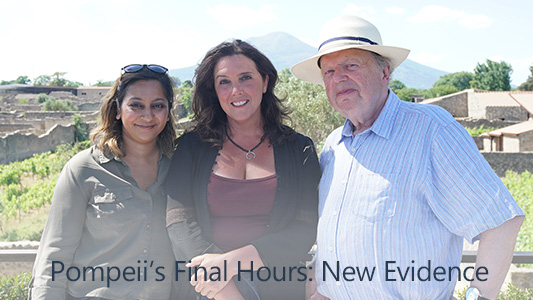
In April 2018 , Dr Estelle Lazer joined colleagues Dr Eric Poehler, Dr Gillian Shepherd, Dr Steven Ellis on ABC's Radio National to discuss the latest archaeological research across the site. You can download the audio or read the transcript via the ABC website. The Pompeii cast Project features in the 2018 documentary Pompeii's Final Hours: New Evidence. Watch Estelle and the team take Bettany Hughes through all the latest evidence revealed by the project on Voltage TV
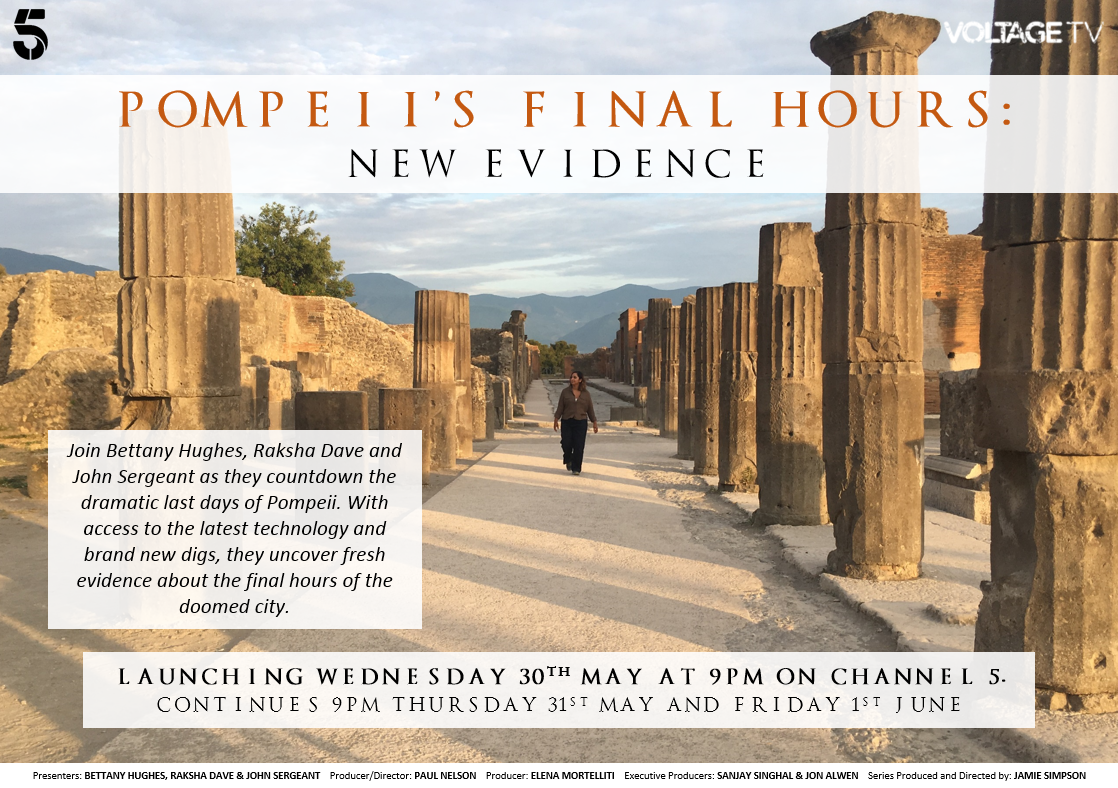
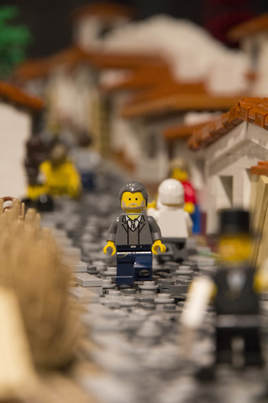
About the Documentary For centuries, a third of the Roman city of Pompeii was left untouched. This meant that hundreds of shops, homes, streets and bodies laid unseen beneath ash and rubble for 2000 years – exactly as they were on the day of the eruption. For the very first time, this untouched part of the ancient town underwent new archaeological digs – Pompeii’s Final Hours: New Evidence captured these ground-breaking works. Over three episodes, Bettany Hughes, Raksha Dave and John Sergeant bring this ancient city back to life. In October Director General Massimo Osanna (Parco Arceologico di Pompei) was presented with his very own LEGO mini-fig at the signing of the Memorandum of Understanding for our Pompeii Cast Project between the University of Sydney and the Pompeii Archaeological Park. Made by Liam Jensen of Lego Classicists (Sydney) and co-ordinated by the Nicholson Museum, Dr Estelle Lazer had the pleasure of presenting LEGO Osanna to Director Ossana. We are thrilled that the mini-fig was well received and was announced by Director Osanna on twitter. The Italian press joined in on the fun, widely reporting on the LEGO Osanna and the Nicholson Museum's exhibtion. Including: La Repubblica Napoli, Il Mattino, Corriere Del Mezzogiorno, Madeinpompeii.it and Ecampania Before making his long journey to Italy, LEGO Osanna was taken on a guided tour through LEGO Pompeii at the Nicholson Museum, where he climbed the heights of the Amphitheatre, met with tourists enjoying the LEGO sites and even joined LEGO Estelle in her work on the skeletal remains. LEGO photography by Dr Craig Barker at the Nicholson Museum. The exhibition of LEGO Pompeii and the Nicholson Museum at the University of Sydney is open to the public from Monday to Friday 10am-4.30pm and the first Saturday of every month 12-4pm and is completely free.
We are so pleased to welcome you to the Pompeii Cast Project's website! Here you will find the latest news and research from the project, all of our resources including past lectures, podcasts, interviews, a full list of our publications and content specifically for teaching ancient Roman history and archaeology. Over the course of the project we will use this blog to share our research, methodologies and field practices, as well as insights into the ethics of investigating human remains and stories from behind the scenes.
|
AuthorSArchaeologists, historians, forensic scientists and uni students all contribute their expertise to the blog. Find out more about our team here. blog subjects
All
Archives
November 2024
Comments HelpTo leave a comment on the blog, or read what others have said, click on Comments link in blue at the top or bottom of each post. Then leave your reply in the form supplied.
|
RSS Feed